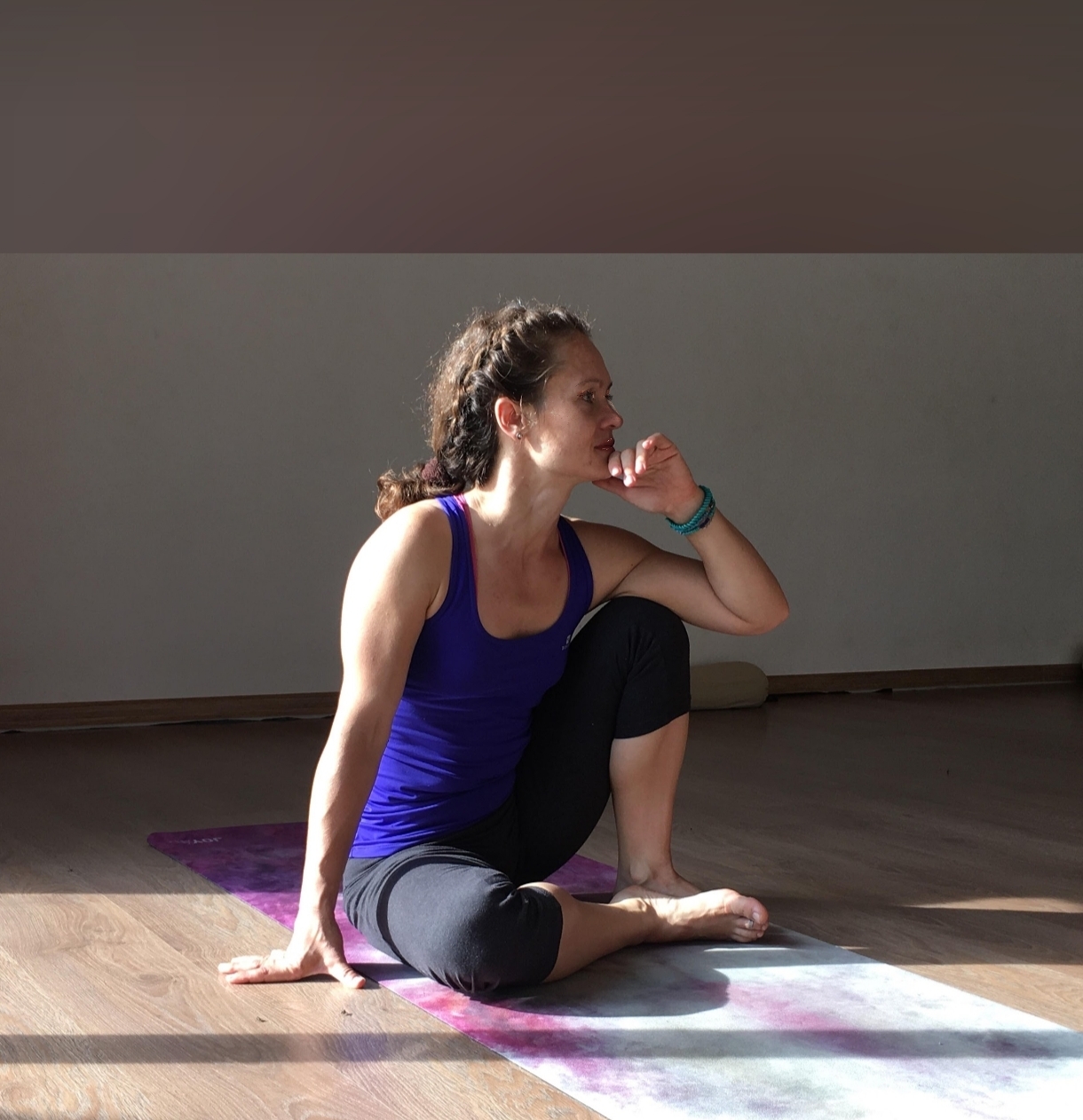
How I work?
First, I identify a pattern directly linked to pain or an injury. Then I look for where, in what movement, and how it manifests itself. I take a broader look at the causes of the situation, which may also have contributed to the current condition.
Next, I begin by analyzing sports and everyday movements, postural patterns, and compensatory patterns. I observe the quality of movements in each direction and determine at what load quantity or number of repetitions the body begins to compensate. For example: the body loses the ability to distribute its weight evenly because one side is much weaker (gets tired much faster) or because of an not correct position of a single joint—for instance, following an injury. This may also result from an incomplete tissue repair process or a lack of full nervous system function in that area.
Next, I focus on unblocking and stimulating blood and lymph circulation to improve muscle nourishment, effectively eliminate accumulated toxins, and deliver blood flow to areas that were previously inaccessible. Then the body has the resources to repair damages or create new connections between tissue structures and fascial bands, which link muscles in specific movement sequences. They also stabilize the joint and provide support for wider rotation. The production of synovial fluid is also very important at this stage to provide cushioning in the joints (the space between the bones increases, the fluid allows for gliding—and with the help of the bands/tensions, the bones can return to their correct positions). Then through appropriate practice, I activate the flow along the meridians and their points (each organ has its own meridian, and each meridian has its own points—some of which may be blocked or inactive). I also stimulate (apply pressing) selected acupressure points.
Diet, sleep, and keeping right heat/ warmth (how the body is able to generate and retain it) also play an important role in this regard, as do experiences with temperature and outdoor weather conditions (connective tissue reacts to temperature; for example, prolonged exposure to cold drafts causes tissue fragility) and several other aspects that lead to the restoration of homeostasis. I work primarily based on TCM (Traditional Chinese Medicine) and my more than 20 years of experience working with the body.
The next stage is resistance training, which involves resisting in various single planes/levels and combinations of resistance across several planes simultaneously. A muscle needs time to learn (again or anew) how to respond to a stimulus/ impulse from the nervous system. This is a gradual restoration of the neuromuscular connection—the brain must reactivate the muscle fibers. This is possible regardless of age, but it takes time. And just as connective tissue regenerates in about 6 weeks, the restoration of the brain-muscle connection can take anywhere from 8 to 18 months. It all depends on the person’s initial condition, the duration of the injury or compensatory behavior, and the body’s individual regenerative capabilities.
Practice, a proper diet, time, and stimulation of the muscles and nervous system are essential parts of the process, but mental openness is also a very important factor. Such readiness requires a certain psychological effort to follow a movement that is less familiar (as opposed to a learned, more comfortable pattern), and which can sometimes even be painful (we create the most common compensations by avoiding pain) or simply more difficult (as opposed to the easy, escapist one). It also requires trust in what the teacher says, because it may contradict one’s perception—that is, the nervous system’s map of reference points built up over the years through compensation (after all, “I’m straight”). And perception can be just as distorted as the pattern itself…
Each case is unique and represents a distinct combination of interdependencies, circumstances, predispositions, and the current state of affairs. That is why I never make assumptions or follow a rigid formula—instead, I study and analyze thoroughly, following both experience and intuition, so that the practice addresses current needs. It is based on the Ashtanga Vinyasa Yoga method, following the spirit of the teachings of Sri T. Krishnamacharya.
Through years of diverse experiences, and the dominance or overload of one side or one part of the body, the body may adopt compensatory postures—postures that are protective or locked in excessive strain or tension —without the ability to return to its “factory settings,” that is, the body in its most natural form, consistent with the original model of healthy postures and functioning. Even the practice of yoga—although it is, by definition, a method for healing the body and mind – and is the most effective method of all those I have encountered—is merely a tool—and every tool can be used both correctly and incorrectly.
Ashtanga, like any physical activity (whether it’s cycling, running, climbing, tennis, martial arts, weightlifting, or even simply cleaning windows or sitting for long periods in a bent or twisted position, and many others), through the repetition of movement sequences and high regularity, quickly highlights/shows our weaker, overloaded, and asymmetrical body parts. It’s worth remembering that Ashtanga is one of the most demanding forms of yoga.
If we miss the moment when compensation begins and focus only on the next Asanas or Series, such a practice—without conscious work in this area—will very quickly lead to injury. This is especially important because the number of repetitions and the variety of movements then work against us. Fatigue sets in, concentration wanes, and the pattern of compensation repeats itself, manifesting in a different form in the next Asana. That’s why it’s sometimes harder to recognize—but that doesn’t mean it isn’t there. It will also be visible in everyday activities, such as resting positions (lying down, sitting, or standing), as well as simple tasks like lifting objects, walking, mowing the lawn, or the posture adopted while washing dishes. All movement patterns are present in everyday life, but they become apparent during intense exertion or under extreme conditions—such as fatigue, cold, or exhaustion. They reach their peak during situations involving intense or prolonged physical exertion.
If we fail to pay attention to these aspects while practicing Ashtanga, we will tend to incorporate previously learned compensatory patterns into our practice, especially when fatigue or overexertion comes into play. We tighten more where we can tighten, stretch more where it’s easier to stretch, and shift our body weight to where it’s more comfortable (though not necessarily correct), and the entire body axis, fascial bands, and joints begin to become more asymmetrical than before. And because there are many Asanas (postures) in a sequence, they are very diverse, and each subsequent one builds upon or deepens the previous one, these imbalances become increasingly visible over time.
We lose balance and alignment across the six fundamental planes (front-back, right-left, up-down). When we add the oblique stretches to this, a bigger problem begins: hernias, nerve compression, abdominal organ dysfunction, and problems with the major joints (hips, knees, ankles, shoulders). Practicing for the quantity as a purpose, rather than leading us to health (the sequence of the First Series is designed to “scan” the condition of the entire body, including an assessment of the state of the organs), begins to fall under the definition of “pointless exertion,” that is, meaningless effort.
The maxim “practice, practice, and all is coming” refers to patience and perseverance in practice; however, this perseverance should be accompanied by properly directed and quantitatively appropriate effort.